

Donations in Action
Grantees: World Council of Optometry and Queens University Belfast
Each year, donations to Optometry Giving Sight (OGS) enable us to fund projects globally that provide immediate eyecare to those in need today, and expand optometry so vision care is available for years to come.
Advocacy and Government Integration
Sustainable vision care requires two things working in parallel: the systems that make eye care accessible, and the people with the skills and conviction to build and defend those systems. This month, two OGS-funded projects illustrate exactly that — one laying the groundwork for a national eye health plan in Zanzibar, the other training the next generation of optometry advocates across six continents.
Zanzibar: A Plan Before the Programs
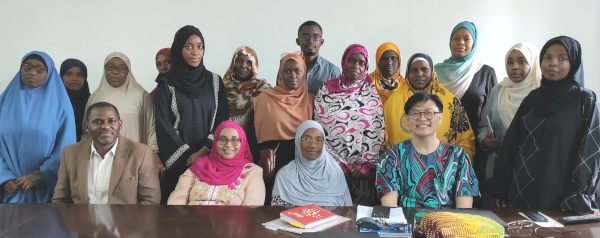
Queen’s University Belfast, in partnership with the Vision Care Foundation and the Ministry of Health Zanzibar, is doing the foundational work required before clinics can open and glasses can be dispensed. Their OGS-funded project is developing Zanzibar’s first National Eye Health Strategic Plan, a roadmap for sustainably integrating optometry and low vision services into the country’s health system.
The team reports completion of a comprehensive situational analysis engaging 123 stakeholders across government, communities, NGOs, patients, and eye care providers at every level of the health system. A plan built on 123 perspectives carries far more legitimacy and staying power than one developed without community input. A high-level roundtable with Zanzibar’s Principal Secretary and senior Ministry representatives followed, generating the kind of government ownership that turns ideas and documents into a policy.
The work wasn’t without obstacles. Unanticipated ethics-approval requirements, rising fuel costs, and the logistical realities of working across both Unguja and the more remote Pemba Island all required adaptation. In response, the team expanded their stakeholder reach, introducing real-time digital data collection, and secured supplementary funding to absorb increased costs—ultimately producing a stronger evidence base and deeper stakeholder buy-in than originally planned.
While the National Eye Health Strategic Plan for Zanzibar is still in development, the people invested in it across sectors are engaged, and the foundation it will be built on is solid.
WCO OPAL: Training the Advocates the Profession Needs
The World Council of Optometry’s OPAL program, also supported by OGS, is building the team who will lead the charge for systems like the one taking shape in Zanzibar.
Now in its fifth year, the Optometry Program for Advocacy and Leadership trained 33 optometrists from 31 countries last year, representing all six WCO geographic regions. An additional 19 participants completed OPAL Advanced Practice in Advocacy, a pilot program designed for graduates ready to take their advocacy work to the next level. Completion rates across both programs exceeded 90%, and the post-course surveys tell a consistent story. Every respondent said they would recommend OPAL to their colleagues, and reported confidence in their ability to engage in advocacy beyond the program. The impact is real.
The impact is also felt in Malawi, where a 2023 OPAL graduate is providing eye exams and glasses to girls and women, 350 pairs distributed in 2025 alone, while building a broader network of care for women facing additional vulnerabilities. Likewise in Malaysia, where a 2022 graduate influenced the Minister of Health to publish new primary eye care service guidelines for private optometrists, giving the profession formal recognition as frontline providers.
Together, these two projects reflect one of OGS’s core beliefs about impact. The glasses and the exams matter deeply. Equally crucial are the plans that guide where those services reach, and the advocates who make sure they keep reaching further. Projects like these are exactly why we do what we do, and we are honored to partner with such outstanding organizations.