
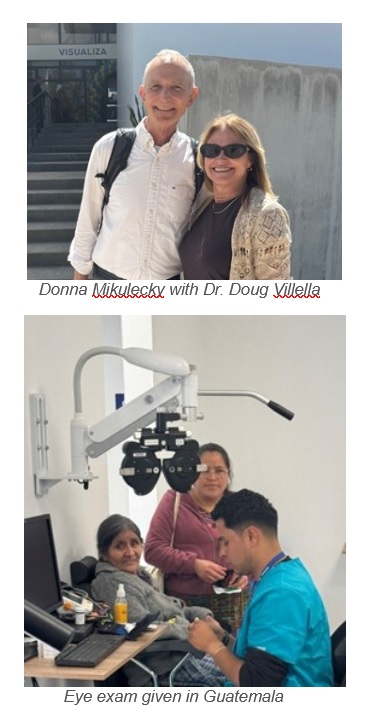
In 2025, Optometry Giving Sight awarded a grant to Vision for the Poor to train 14 optometry technicians as primary care optometrists. These professionals will staff six new vision centers and one eye hospital within a $54 million, self-sustaining national eye care network designed to eliminate treatable blindness for 3.5 million Guatemalans by 2032.
A key strength of this initiative is the empowerment of indigenous optometrists to serve both urban and rural communities. Trainees are recruited from the regions where new facilities will be built, allowing them to communicate in local dialects and understand cultural needs, ensuring care that is both accessible and trusted.
Executive Director Donna Mikulecky recently shared her experience visiting the project.
“It was an honor to witness firsthand how deeply this project is rooted in the communities it serves. The commitment, compassion, and professionalism of the local team reaffirm that sustainable eye care begins with investing in local people. Their dedication is the reason this model works—and why it will continue to change lives for generations.
“This visit reminded me why we exist and why the support of our donors is essential: to create a future where everyone has access to eye care, regardless of ability to pay. It is a privilege to help build that future.”
The project’s sustainability is driven by a locally led, data-based model in which each hospital and vision center becomes financially self-sufficient. Through a proven cross-subsidized system—where patients pay full price, partial price, or nothing based on their means—facilities remain stable while ensuring equitable access.
This ambitious national plan began 30 years ago in Guatemala’s Petén rainforest, when a Vision for the Poor team recognized the need for permanent, high-quality, high-volume eye care that short-term mission trips could not meet.
Vision for the Poor Executive Director Doug Villella, OD, reflects:
“All the ingredients for success were there from the beginning. Dedicated U.S. volunteers worked year-round to support compassionate Guatemalan eye doctors, funded by hundreds of generous donors. In the early years, the Guatemalan team treated 4,000 patients annually. We never imagined it would grow to 300,000 patients a year across four hospitals and 20 vision centers with a staff of 500. It’s been an unfolding miracle.”
The project is carried out by Visualiza, co-founded by Vision for the Poor. Visualiza is Guatemala’s only social service eye care network and employs 100 optometrists who provide high-quality, affordable care to the country’s poorest communities.